
Keep Your Event Moving Without Visible Direction
Showcalling for multi-segment events that need every cue, transition, and technical change to happen on time
Amplified Production Group provides showcalling services for events where timing matters and visible confusion is not an option. When your program includes multiple presenters, video cues, lighting changes, audio transitions, live performances, or tight segment timing, every production element needs to move together. That does not happen by chance.
A showcaller serves as the central point of communication across the production team, keeping the event script, technical cues, and live timing aligned from start to finish. While the audience sees a smooth program, the showcaller is calling each transition through headset communication so audio, video, lighting, staging, and presenter movement happen at the right moment. No missed cues. No awkward pauses. No visible scrambling.
Showcalling is especially important for corporate galas, panel discussions, fundraisers, conferences, award programs, and live productions where the event moves quickly between speakers, media, and stage moments. If a presenter runs long, a video needs to hold, or a lighting cue needs to shift, the showcaller adjusts the flow in real time without letting the audience feel the change.
Reach out to discuss how showcalling can support your upcoming event and reduce coordination risks before show day.
How Showcalling Manages Complex Event Sequences
Showcalling starts with the script. Before the event, Amplified Production Group reviews the run of show, marks every cue point, identifies technical dependencies, and confirms how each segment should move. That includes speaker transitions, video playback, lighting states, audio cues, stage resets, and any moments where timing needs to be exact.
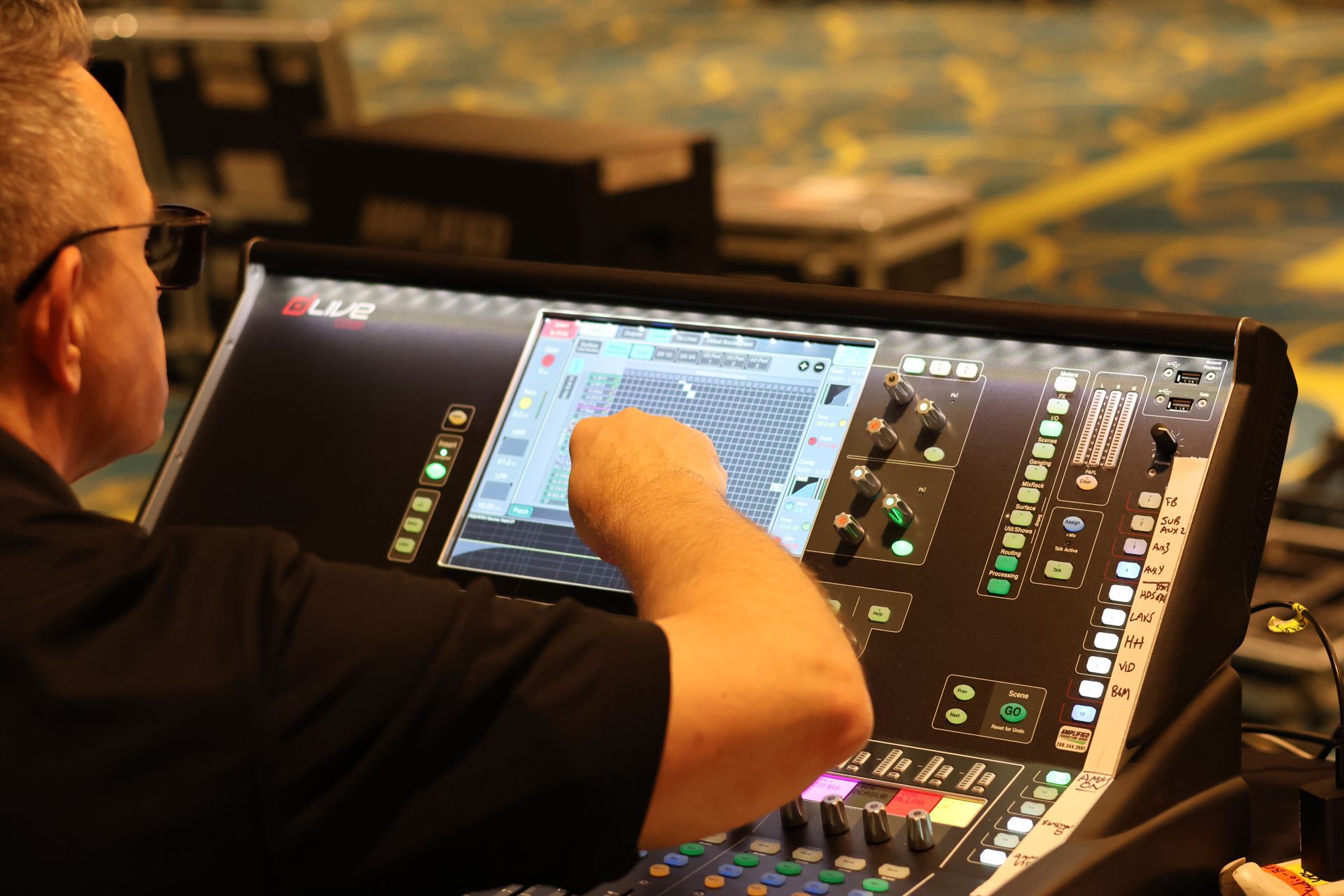
During rehearsal, the showcaller walks through the sequence with the production team so every operator understands what is coming, what they are waiting for, and when to execute. During the live event, the showcaller follows the marked script and communicates through a closed headset system with audio engineers, lighting technicians, video operators, stage managers, and other crew members. Cues are called clearly and consistently so every operator is ready before the moment arrives.
That coordination prevents the issues audiences notice immediately. A video does not start before the speaker finishes. A microphone is not late when someone steps to the podium. Lighting does not shift too early. Slides do not advance at the wrong time. The event keeps moving because someone is focused entirely on timing and communication. If a segment runs long, ends early, changes order, or needs to be skipped, the showcaller adjusts upcoming cues in real time. The production team stays aligned, and the event continues without forcing the host, planner, or stage manager to solve technical timing issues mid-program.
Showcalling does not replace audio, video, lighting, or staging technicians. It coordinates their work across the event timeline. For simple events with minimal cues, a standard production team may be enough. But as soon as your event involves multiple segments, timed transitions, video playback, speaker changes, or distributed crew positions, dedicated showcalling adds control where pressure usually builds..
What You Should Know About Showcalling
If you are planning an event with layered production elements, these details clarify how showcalling works in practice.
What does a showcaller do during rehearsal?
The showcaller walks through the full run of show with the production team, confirms cue points, tests headset communication, reviews timing expectations, and identifies any moments that may need adjustment before the audience arrives.
How does showcalling handle last-minute changes to the event schedule?
The showcaller updates the marked script, communicates revised cues to the appropriate operators, and adjusts transitions so the event continues smoothly even if a segment changes, moves, runs long, or gets cut.
When is showcalling necessary instead of relying on individual technicians?
Showcalling becomes important when your event includes multiple cued transitions, several media formats, rotating speakers, live performances, or production teams working from separate control positions. The more moving pieces involved, the more valuable one central cue caller becomes.
Why can't the event host or stage manager call technical cues themselves?
The host is focused on the audience and content. The stage manager is focused on presenters, movement, and backstage flow. A showcaller is focused only on technical timing, cue execution, and communication with operators. That separation keeps each role clear and prevents missed details.
How does showcalling reduce coordination issues in Boise venues with distributed technical positions?
Audio, video, lighting, and staging teams are often positioned in different parts of the venue. The showcaller connects those teams through one communication system, making sure operators who cannot see each other still execute cues in the right sequence.
If your event requires precise timing across multiple production elements, contact Amplified Production Group to arrange showcalling support and keep the program moving with confidence from start to finish.