

Broadcast Your Event Beyond the Room
Livestreaming for events that need clear video, clean audio, and reliable delivery to remote audiences
Amplified Production Group delivers livestream production for events that need to reach people who cannot be in the room. Whether you are hosting a corporate town hall, a conference with remote attendees, a fundraiser with donors watching from home, or a hybrid program with virtual speakers, the stream has to feel controlled from start to finish.
Remote viewers notice when the video freezes, the audio drops, the camera angle misses the speaker, or the platform creates access issues. Those problems do more than interrupt the stream. They make the audience feel disconnected from the event.
Our livestreaming service manages the full technical workflow, including camera placement, video switching, audio mixing, encoding, platform setup, and live monitoring. The goal is simple: your remote audience should see the event clearly, hear every speaker, and stay connected without wondering whether the stream will hold.
Reach out to plan your livestream event and discuss technical requirements for your venue, platform, and audience size.
How Livestreaming Extends Your Event's Reach
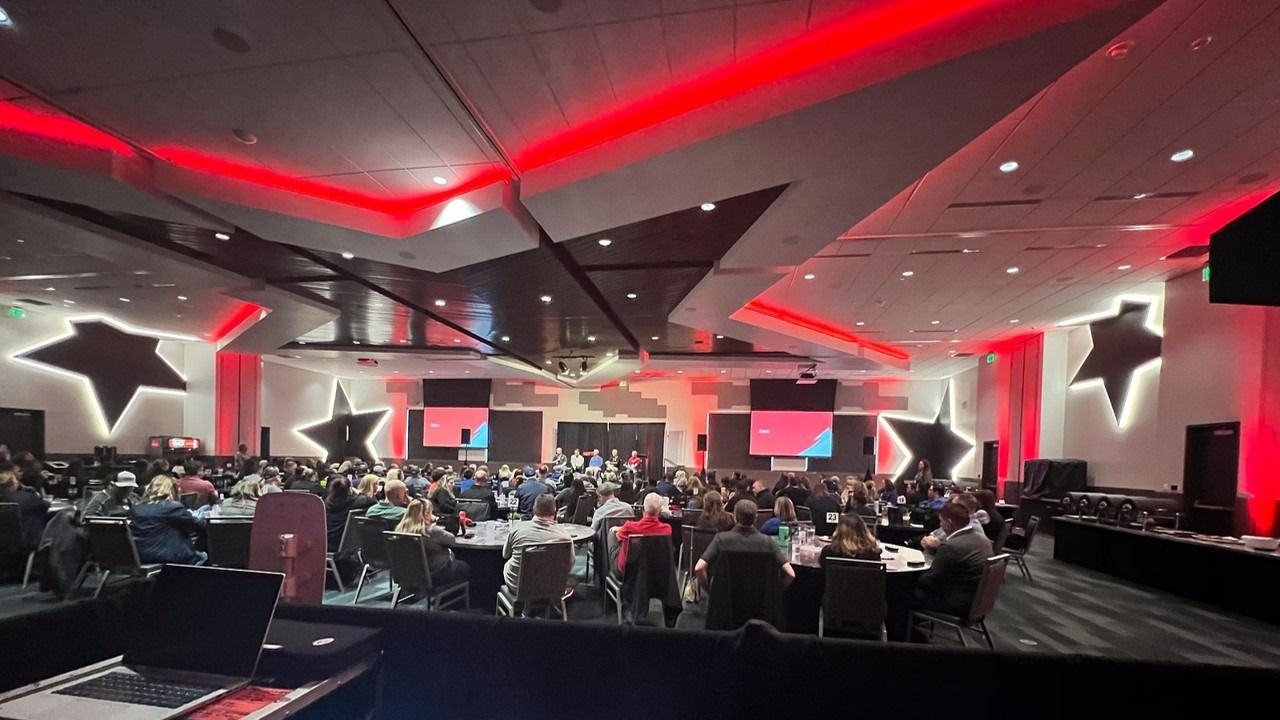
Professional livestreaming starts before the event goes live. Amplified Production Group arrives early to set up cameras, connect audio sources, configure the encoder, test upload speeds, and run stream checks before the audience joins. We confirm the signal path from camera to platform, test audio levels, review presentation inputs, and identify anything that could affect delivery once the event begins.
During the livestream, our team monitors the production in real time.
Camera angles are switched based on what is happening onstage. Audio is mixed so presenters, panels, Q&A segments, and room sound remain clear and balanced. Presentation slides, graphics, lower thirds, or remote speakers can be integrated into the stream when needed. Platform settings are managed so viewers can access the event without unnecessary friction.
For hybrid events, we can help remote participants feel connected to the room instead of treated like an afterthought. Their audio can be brought into the sound system, their video can be displayed on screens, and their questions can be integrated into the live program.
That coordination matters because livestreaming is not just recording what happens in the room. It is producing a second audience experience at the same time. When handled correctly, remote viewers get smooth transitions, clear audio, stable delivery, and a stream that follows the rhythm of the event. The livestream can also be recorded during the broadcast, creating an archive file for later distribution without requiring a separate capture setup.
Livestreaming does not include post-event editing, closed captioning, or multi-language translation unless arranged separately. Stream quality depends on venue lighting, background noise, production complexity, and available upload bandwidth. Simple single-speaker events may only need a lighter setup, while multi-segment programs, hybrid events, and audience interaction benefit from dedicated camera operators, audio support, and live switching.
What to Expect From Professional Livestreaming
If you're planning to reach remote audiences through livestreaming, these details clarify how the service works in practice.
What equipment do you use for multi-camera livestreaming setups?
We deploy broadcast-quality cameras with optical zoom, wireless HDMI transmitters for presentation capture, a video switcher for real-time angle changes, and a hardware encoder that converts the mixed signal into a format compatible with streaming platforms.
How do you ensure audio quality when streaming from venues with challenging acoustics?
The team pulls audio from the appropriate microphones and sound sources, then monitors the mix throughout the event. Directional microphones, direct audio feeds, gain adjustments, and real-time monitoring help reduce echo, background noise, distortion, or uneven volume before those issues reach remote viewers.
When is livestreaming more effective than simply recording the event for later upload?
Livestreaming is best when the remote audience needs to participate in real time, watch announcements as they happen, ask questions during Q&A, or feel included alongside the in-person audience. Recording works for later viewing, but it does not create the same immediacy or interaction.
Why does internet bandwidth matter more for livestreaming than for standard video calls?
Livestreaming requires a stable upload connection that can hold consistent video and audio quality over the full event. If bandwidth drops, viewers may experience buffering, reduced image quality, audio issues, or stream interruptions. Testing the connection early helps determine the right encoding settings and backup options- that's why we plan in advance.
How does livestreaming work in Boise venues with limited internet infrastructure?
The team tests upload speeds before the event, reviews available network options, and configures the stream based on real conditions in the venue. Backup options, including cellular hotspots or bonded connections, may be used when the venue network is unreliable or not strong enough for professional delivery.
If your event needs to reach audiences beyond the room, contact Amplified Production Group to arrange livestreaming services and confirm technical feasibility for your venue and platform.