
Clear Sound and Sharp Visuals Keep Audiences Focused
Audio and visual production for events where every voice, screen, cue, and transition needs to work without distraction
Amplified Production Group provides audio and visual support across the nation (or the world) for corporate events, conferences, live productions, and large-scale programs where clarity determines how well your message lands. When a microphone drops out, a presenter sounds uneven, a video plays out of sync, or content is difficult to see from the back of the room, the audience notices. So does your team.
That is exactly what professional AV planning is built to prevent.
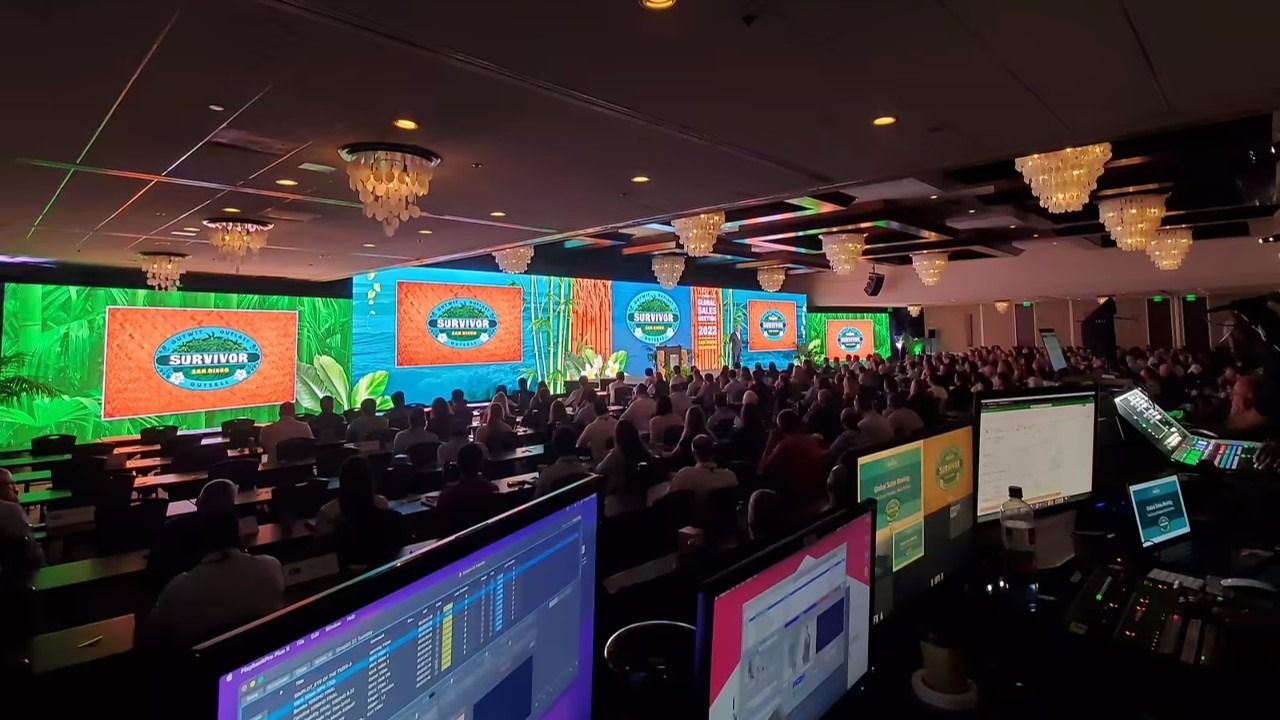
Our team manages sound systems, microphones, video playback, projection, LED displays, switching, and technical operation so every element supports the event instead of pulling attention away from it. We position speakers for even coverage, tune microphones to each presenter, test playback before it matters, and monitor the room in real time.
Clear audio keeps people engaged. Sharp visuals keep information moving. Controlled execution keeps the event from feeling uncertain.
If your upcoming event requires reliable audio and video support, reach out to discuss your venue, audience size, and technical requirements.
How Professional AV Equipment and Operators Improve Event Delivery
Strong audio and visual production starts before equipment enters the room.
Amplified Production Group begins by understanding your venue, audience size, program format, and content requirements. Our team evaluates the room layout, acoustics, speaker placement options, screen visibility, power access, and possible interference points that could affect sound or video performance. That planning determines what your event actually needs.
Not a generic AV package. Not a setup that only works on paper. A production plan built around the room, the audience, and the pressure of a live environment. For audio, we select microphone types, speaker placement, mixing needs, and monitoring support based on how presenters, panels, performers, or hosts will use the space. For visuals, we confirm display type, resolution, playback requirements, sightlines, and source switching so content appears clean and consistent from every seating area. During the event, our technicians stay active on every system.
Audio levels are adjusted as presenters move or speak differently. Video sources are switched cleanly. Playback is monitored for timing and quality. Feedback, lag, signal issues, or source problems are handled before they interrupt the room. That is the difference between having equipment and having a team that knows how to run it.
This service includes equipment delivery, setup, operation, and teardown. It can integrate with staging, lighting, LED wall installation, and full live event production when your event requires multiple technical elements. Content creation, video editing, slide design, and livestream production are not included in standard AV support, but our team can coordinate with your content providers to make sure file formats and resolutions are ready for playback.
What to Expect from Professional Audio and Visual Support
Common questions about AV support focus on equipment selection, microphone options, content playback, and how technicians prevent technical issues from reaching the audience.
What type of microphone works best for a panel discussion with multiple speakers?
Wireless handheld or lapel microphones are commonly used for panel discussions because they allow speakers to participate comfortably while the audio engineer manages individual levels. The right choice depends on the panel format, seating arrangement, room acoustics, and whether speakers need to move or remain seated.
How does the video technician ensure smooth transitions between slides and video clips?
The video technician tests content before the event, confirms file compatibility, loads approved assets into the playback system, and uses switching equipment to move between sources cleanly. This helps prevent black screens, lag, incorrect display settings, or awkward pauses between segments.
When should you conduct a sound check for a multi-presenter event?
Sound checks usually happen during rehearsal or before doors open. Each presenter should test their microphone, confirm audio levels, walk through stage positions if needed, and review any transitions involving video, music, or lighting cues.
Why do room acoustics affect microphone and speaker placement?
Hard surfaces, high ceilings, glass walls, concrete floors, and irregular room shapes can create echo, feedback, or uneven sound coverage. The AV team adjusts speaker placement, microphone positioning, gain levels, and equalization so the room sounds clear instead of harsh or inconsistent.
What happens if a microphone battery fails during the event?
The audio engineer monitors wireless systems throughout the event and keeps spare batteries, backup microphones, and replacement components ready. If a problem appears, the team can respond quickly without turning a small technical issue into a visible disruption.
Amplified Production Group works with event planners, corporate teams, organizations, and production partners to deliver audio and visual support that keeps audiences focused on the content, not the equipment. When your event needs clear sound, sharp visuals, and AV execution that holds under pressure, contact the team to review your venue and technical needs.